
The 8TB Game-Changer: How to Snag a “Futureproof” SSD Before Prices Skyrocket
Hey there, fellow tech enthusiast. Have you been eyeing up those massive, multi-terabyte SSDs, only to gulp at the price tag? You’re not alone. The world of storage is getting pricier, and it turns out our love for speedy drives is colliding with the global AI gold rush. But right now, there’s a glimmer of hope on Amazon that’s worth talking about.
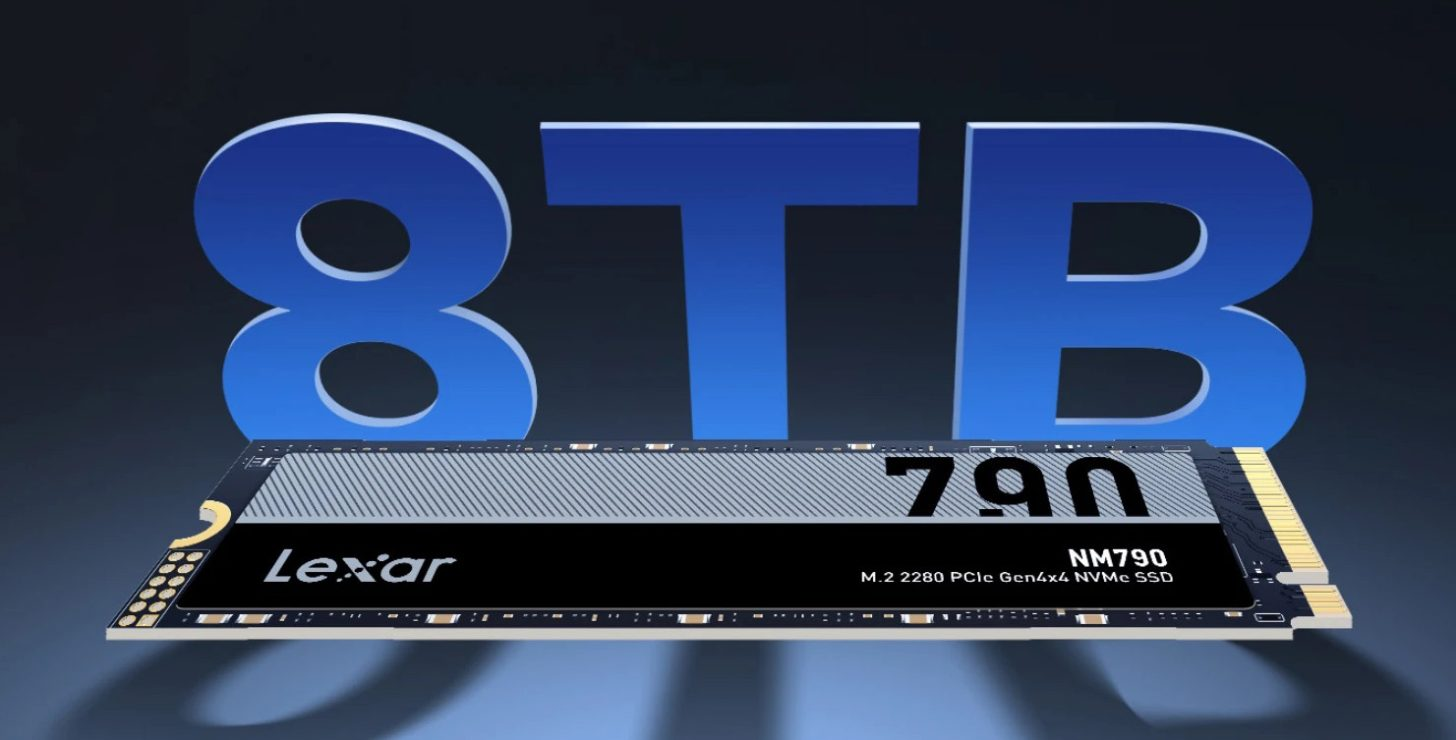
Let’s cut to the chase: the Lexar NM790, an 8TB PCIe Gen 4 NVMe SSD, is sitting at $643.60. Now, I know what you’re thinking—that’s still a serious chunk of change. But in the context of where storage prices are heading, this deal isn’t just good; it might be a strategic move. Think of it as a “futureproofing” mission for your PC or console.
Here’s the real story behind why this is making waves.
Sponsor Break!

The Storage Squeeze: Why SSDs Are Getting More Expensive
First, let’s talk about the elephant in the room. You might have noticed that SSD and RAM prices haven’t been dropping like they used to. There’s a straightforward, if frustrating, reason.
Companies that make the crucial DRAM chips inside our gadgets are pivoting. Giants like Micron are shifting their factory lines away from consumer products to fulfill massive, lucrative orders for AI companies. All those powerful servers needed to train models like ChatGPT need memory, and lots of it. This has created a shortage in the consumer market.
Industry whispers suggest this crunch might not ease up until late 2027. That’s a long time to wait for a potential price drop. So, the drives we love—the ones that make our games load in a blink and our creative projects render smoothly—are likely to become more of a premium purchase in the coming years.
In that light, getting a high-capacity, high-performance drive now starts to look less like a splurge and more like a savvy hedge against rising costs.
Meet the Lexar NM790: Not Just Big, But Blazingly Fast
So, what exactly are you getting for your investment? The Lexar NM790 in its colossal 8TB version is more than just a digital warehouse.
This isn’t some slow, plodding drive that just happens to have a lot of space. Lexar built this thing to move. We’re talking sequential read speeds up to 7,400 MB/s and writes up to 6,500 MB/s. To put that in perspective, that’s roughly twice as fast as the previous generation of PCIe Gen 3 drives that many of us still have in our systems.
That speed transforms what you can do. It means moving a 100GB game folder takes seconds, not minutes. It means your video editing software scrubs through 4K footage without a stutter. It means your entire system just feels more responsive.
And the tech under the hood is built to last. It uses 3D TLC NAND flash—a sweet spot for reliability and performance—and comes in the familiar M.2 2280 form factor that fits into most modern motherboards and laptops.
The Ultimate Upgrade for Gamers and Creators Alike
This is where the NM790 gets really exciting. That killer combination of speed and capacity opens two fantastic doors.
For the Console Warriors: If you’re a PS5 or PS5 Pro owner, you know the struggle. That built-in SSD fills up alarmingly fast with today’s massive game installs. Sony specifically recommends PCIe Gen 4 drives for expansion, and the NM790 checks every box. It’s not just compatible; it’s overqualified. Sliding this into your console’s expansion slot effectively gives you a permanent, high-speed storage boost. Imagine having your entire top 20-game library installed and ready to play, without the dreaded “copying” wait times.
For the Power Users and Creators: For PC builders, content creators, and data hoarders (we say that affectionately), 8TB is a dream capacity. It’s enough for an enormous games library, a full suite of creative software, and years of photo and video projects—all on one drive. Using this as your primary drive or a dedicated project workspace can streamline your workflow dramatically. No more juggling files between a fast boot drive and a slow hard drive for archives.
The Bottom Line: Is This Your Move?
Let’s be real. $643 is a significant investment. This isn’t an impulse buy; it’s a considered purchase for someone who genuinely needs the space and the speed, and who is looking at the market trends with a wary eye.
If you’re someone who:
- Is tired of managing storage space on a PS5 or high-end PC.
- Works with large files regularly (video editing, game development, big data sets).
- Believes in buying a premium component once every few years instead of upgrading incrementally.
- Wants to get ahead of potential price increases in the storage market…
…then this deal on the Lexar NM790 8TB is arguably the most compelling offer on the table. It’s a chance to lock in both immense capacity and top-tier Gen 4 performance at a price that, in the current climate, is surprisingly grounded.
The tech market is rarely predictable, but when a clear trend (like rising memory costs) meets a specific, high-end product at a relative discount, it’s worth paying attention. This might just be your moment to cross “storage” off your upgrade list for the next half-decade.
FAQs: Your Lexar NM790 8TB Questions, Answered
Q1: Is the Lexar NM790 8TB really good for a PS5?
A: Absolutely. It exceeds Sony’s speed requirements for PS5 storage expansion. Its 7,400 MB/s read speed is far above the minimum 5,500 MB/s, and its standard M.2 2280 size fits perfectly in the console’s expansion bay. It’s a fantastic way to permanently solve the PS5’s limited storage.
Q2: Why is this considered a “deal” when it’s over $600?
A: In the world of high-capacity, high-speed SSDs, pricing is often steep. Compared to other 8TB Gen 4 models, which can easily cross the $800 or even $1,000 mark, the NM790’s price point is notably aggressive. Given the industry-wide trend of rising memory costs, its current price is seen as a strong value.
Q3: How reliable is a drive this large?
A: The NM790 uses 3D TLC NAND flash, which offers a great balance of endurance, speed, and cost. Lexar provides a substantial terabytes written (TBW) rating for the drive, meaning it’s designed to handle writing many thousands of terabytes of data over its lifetime—far more than a typical user would ever need.
Q4: Do I need a special motherboard or adapter for it?
A: Not at all. It uses the standard M.2 PCIe NVMe interface that’s been common on motherboards and laptops for years. Just make sure you have an available M.2 slot that supports PCIe Gen 4 to get the full speed, though it will still work in a Gen 3 slot at slightly lower speeds.
Q5: Could prices actually drop sooner, making this a bad buy?
A: While prices can always fluctuate, the major industry analysts are forecasting that DRAM supply constraints, driven by AI demand, will keep consumer SSD prices firm or rising through 2026 and potentially into 2027. This context is what makes current prices on drives like this one look more appealing for those ready to buy now.
What do you think? Is your storage situation screaming for an 8TB upgrade, or are you holding out for a different sweet spot? Let us know over on wikki.press—we’re always geeking out about the next big upgrade.